Digital Marketing Funnel: From First Click to Loyal Customer
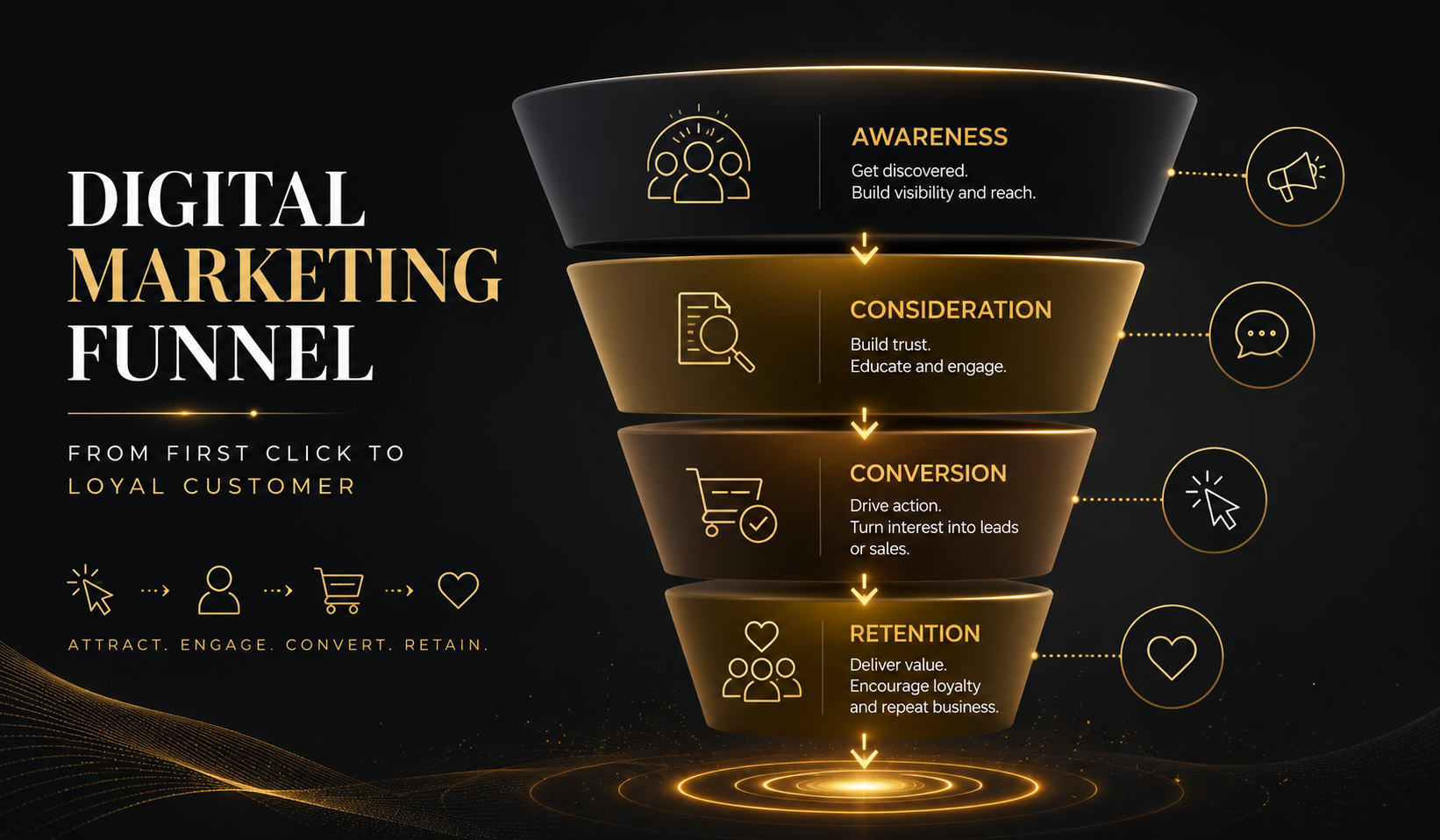
The Digital Marketing Funnel illustrates the journey of a potential customer, from first discovering your brand to becoming a loyal, repeat customer. Understanding each stage allows marketers to create strategies that maximize conversions, increase engagement, and improve customer lifetime value.
Customers do not usually make a purchase immediately after discovering a business. They need useful information, clear communication, trust, and a simple path toward action. A structured funnel helps businesses deliver the right message at every stage of this journey.
Digital Marketing Funnel Stage 1: Awareness
At the awareness stage, users discover your brand through search engines, social media, advertisements, recommendations, or educational content. The goal is to capture attention and introduce your value proposition clearly.
- Optimize landing pages with clear messaging through our web design services
- Create informative content for your blog page
- Reach relevant audiences through our social media services
At this stage, avoid pushing visitors toward an immediate purchase. Instead, answer their first questions and help them understand the problem your business can solve. Blog articles, short videos, social posts, and simple guides are effective awareness tools.
Digital Marketing Funnel Stage 2: Consideration
During the consideration stage, users already understand their needs and begin comparing different solutions. They may review service pages, read case studies, check testimonials, or subscribe to an email list.
Effective consideration-stage strategies include:
- Email marketing sequences that educate potential customers
- Case studies and testimonials that build trust
- Service comparisons that explain important differences
- Remarketing campaigns that maintain brand visibility
- Webinars, guides, and consultations that answer questions
For additional information about structuring a customer journey, explore the HubSpot guide to the marketing funnel .
Segment leads by their behavior, interests, and current funnel stage. Relevant and personalized content can move potential customers toward a purchasing decision more effectively.
Digital Marketing Funnel Stage 3: Conversion
The conversion stage is where potential customers take an important action, such as completing a purchase, booking a consultation, requesting a proposal, or subscribing to a service.
Optimize every conversion touchpoint with:
- Clear and visible call-to-action buttons
- Simple contact, booking, and checkout forms
- Fast and responsive landing pages
- Transparent pricing and service information
- Trust signals such as reviews, certifications, and guarantees
Unclear instructions, unnecessary form fields, or slow-loading pages can cause qualified prospects to leave. Test the complete conversion process on desktop, tablet, and mobile devices to remove unnecessary obstacles.
Digital Marketing Funnel Stage 4: Retention
The Digital Marketing Funnel does not end after a purchase. The retention stage focuses on keeping customers satisfied, encouraging repeat purchases, and building long-term relationships.
- Regular email updates and relevant special offers
- Helpful onboarding and after-sales communication
- Exclusive content or customer loyalty programs
- Fast support and customer feedback collection
- Social engagement that maintains an active community
Existing customers already know and trust your business. Retention campaigns can therefore generate repeat purchases, referrals, positive reviews, and additional service opportunities.
Measuring Digital Marketing Funnel Performance
Each funnel stage should be measured with suitable performance indicators. Awareness can be evaluated through reach and relevant traffic, while conversion requires tracking completed forms, purchases, bookings, and qualified leads.
- Website traffic and audience reach
- Content engagement and email subscriptions
- Lead-to-customer conversion rate
- Cost per qualified lead or customer
- Repeat purchases and customer retention
- Revenue generated by each marketing channel
Analytics tools help identify where users leave the customer journey. Businesses can then improve weak landing pages, unclear messages, forms, content, or follow-up campaigns. Learn more about measuring website activity through the official Google Analytics platform .
Optimize Your Digital Marketing Funnel Today
Create a connected customer journey from the first click to long-term loyalty. Discover our full range of digital marketing services or contact our team for a strategy designed around your business goals.